
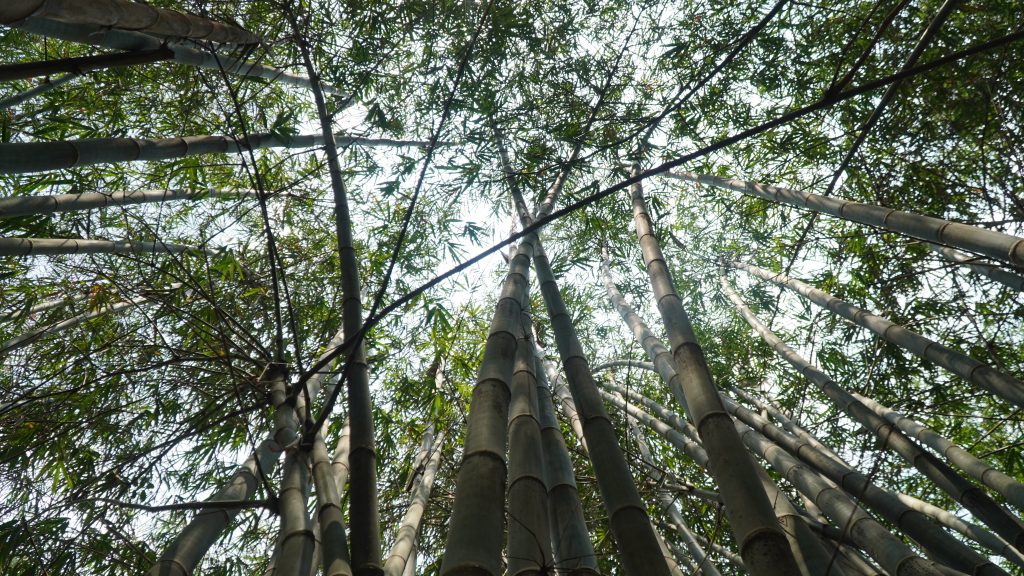
(the moment my questions found their roots)
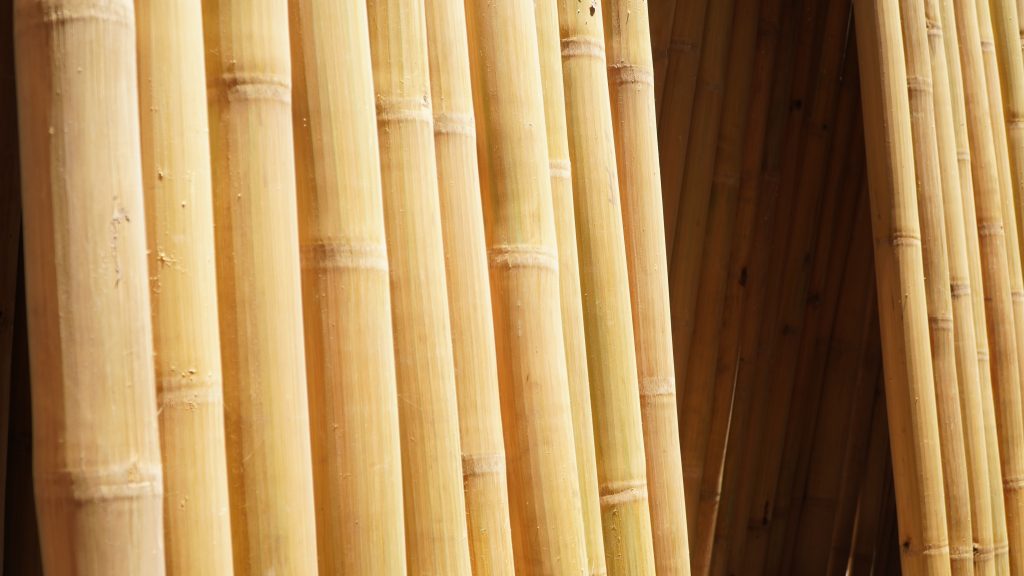
There I was, standing in the heat of Rangkasbitung, locking eyes with bamboo. There’s nothing like starting a new internship by being star struck, seeing sunbathing bamboo stalks that are tall, golden, and absurdly photogenic. I believe the bamboo was aware of its beauty.
Before I knew it, I was being introduced to how Indonesian bamboo furniture—especially the kind produced at the Shaniqua Bamboo factory—could find its way into the international market.
I’ve summarized it all here:
The bamboo used in Shaniqua Bamboo’s factory is carefully sourced either from their own plantation, located about 10 kilometers away, or from trusted local farmers they’ve partnered with. These partnerships ensure a steady and sustainable supply of quality bamboo while also supporting the local community.
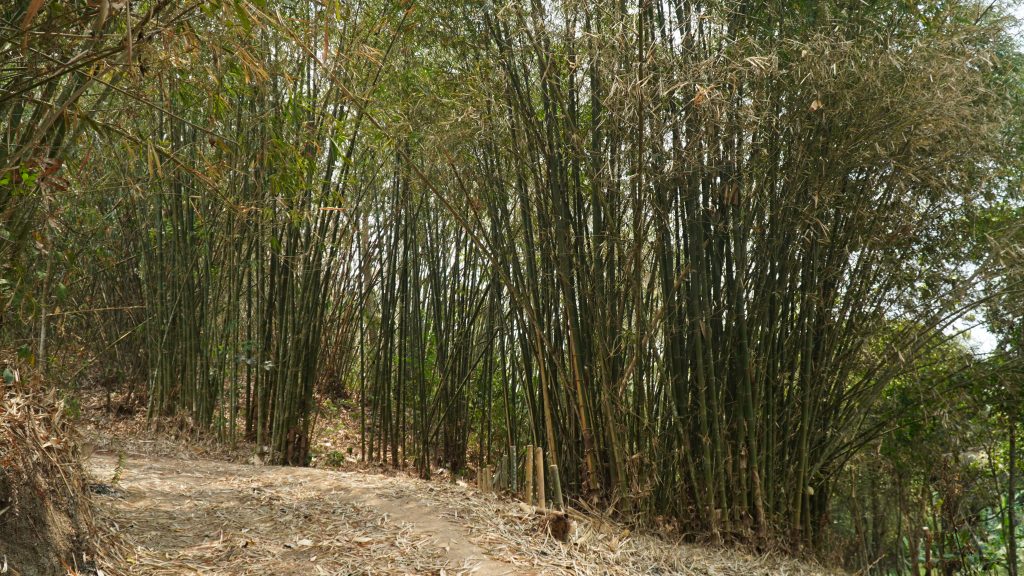
Now, let’s talk about bamboo. Bamboo might look like a tree, but it’s actually a type of grass (gramineae) that grows in clusters with hollow, jointed stems that look a lot like tree trunks. What makes bamboo extra special is how fast it grows and how well it can handle extreme weather, which is perfect for long-term use in sustainable production.
Most of the bamboo used at Shaniqua Bamboo is grown around Rangkasbitung, within a 15-kilometer radius of the factory. Their own plantation is harvested on a rotation, and when it’s not time to cut there, they purchase from the partner farmers. Here’s what I love: the harvesting process is done mindfully: only certain stalks are chosen from each clump, based on the size needed, so they never wipe out an entire patch.
For furniture production, the bamboo needs to be the right size, usually between 3 to 11 cm in diameter, depending on what’s being made. But don’t expect piles of bamboo lying around the factory. Shaniqua Bamboo only produces when there’s a confirmed purchase order. Everything made already has an owner.
Want to know what’s next on bamboo’s journey to becoming furniture?
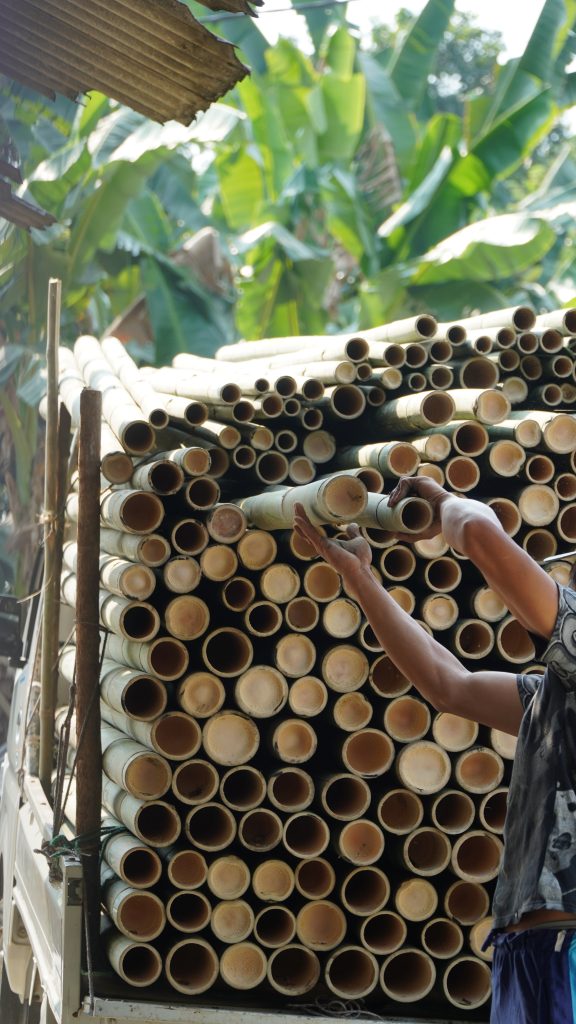
Once bamboo arrives at the factory, it undergoes a detailed sorting process. Only stalks that meet the criteria—correct diameter, straight form, thick walls, and mature age—are selected. The next step involves a traditional technique known as rojok, where workers use a 4-meter iron rod to pierce through the internal nodes of each stalk. This isn’t just for show. By opening up the internal chambers, the bamboo can absorb preservation treatments more effectively and maintain balanced air pressure throughout. Following that, workers carefully strips away the outer skin—or epidermis.
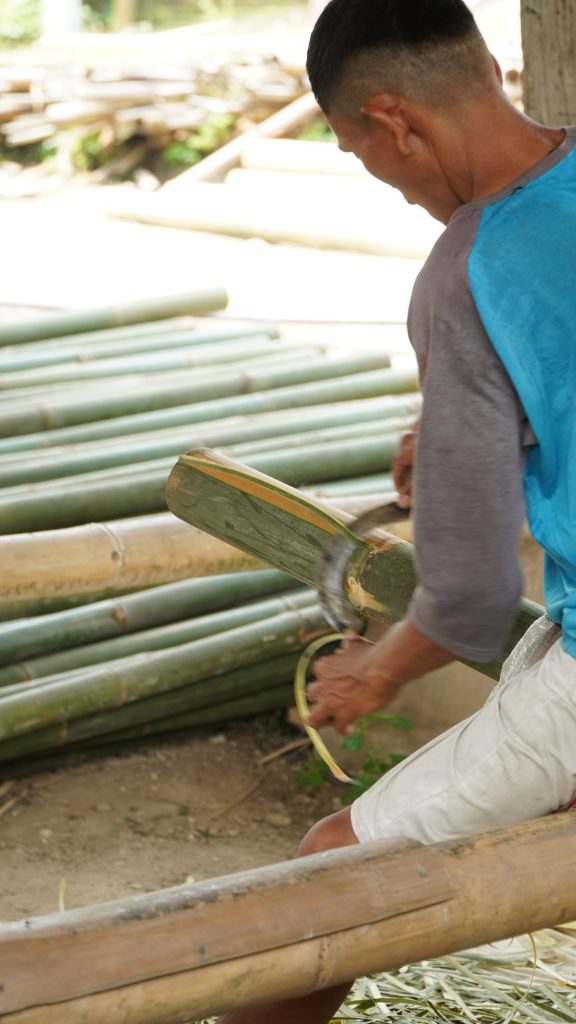
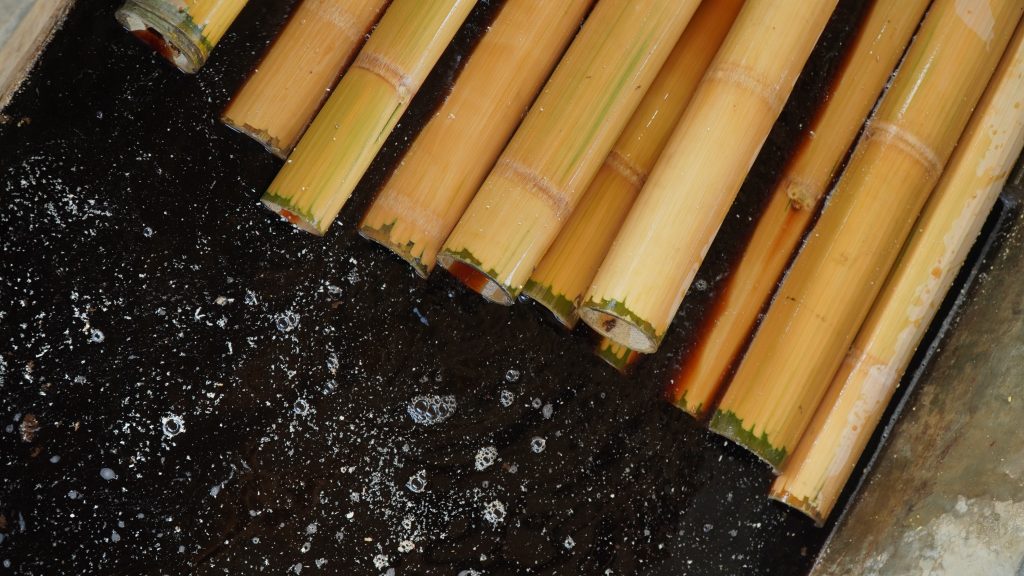
Once smooth and clean, the bamboo is soaked to draw out its natural sweet sap. (This part’s a bit of a trade secret, so details are hush-hush!) However, what’s known is that the bamboo is soaked for two to three nights, which helps improve durability and prevent pest infestations.
Finally, the bamboo is laid out under direct sunlight to dry. This process takes between two to three weeks, or until the bamboo reaches a moisture content of 12% to 18%. The exact level is measured using a wood moisture meter, ensuring consistency and quality across every batch.
Yep—becoming furniture-ready takes time.
Once that initial process is finished, the bamboo is ready to move into the next phase of production. And me? I needed a cold drink (shout out to es cendol). Rangkasbitung isn’t shy with its sunshine.
To be continued,
Sarah Kairanisa
Business Development of Shaniqua Bamboo


